In the story of Ebru’s House, the apple is not just a fruit
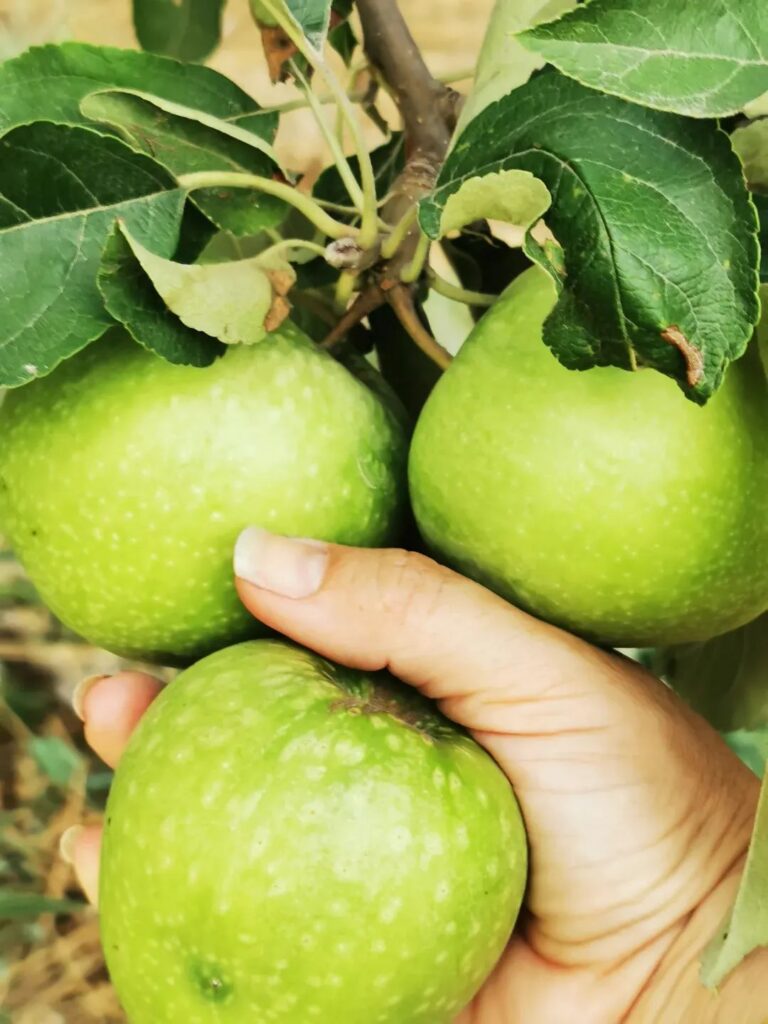
When I first came to the Darısekisi gardens, there were apple trees that had lived in the garden for years.
One of them was nearly dying due to the damage caused by worms. Before winter set in, I coated its trunk with lime sulfur and carefully tended to even its cracks.
We got through that winter together.
Today, that tree is one of the strongest in the garden.
Over the years, I have also planted new apple saplings in the garden. Now, we pick and eat their fruit straight from the branch. Every season, I watch the apples grow, ripen, and the tree find its own balance.
The apple is a beautiful tree that tells us about nature’s own order
If you do not thin the fruit on the tree, it releases more than it can carry and drops the fruit it does not need to the ground. In other words, the tree knows its own weight.
Our understanding of agriculture is a bit like this.
The right time for the apple in our vinegar
The apples we use for Ebru’s House Organic Apple Cider Vinegar are not the apples grown in our Darısekisi gardens. Because what matters to us in vinegar making is not only that the apple looks beautiful;
it is that it completes its own natural process on the branch, ripens, develops its sugars, and carries its aroma to the highest level possible.
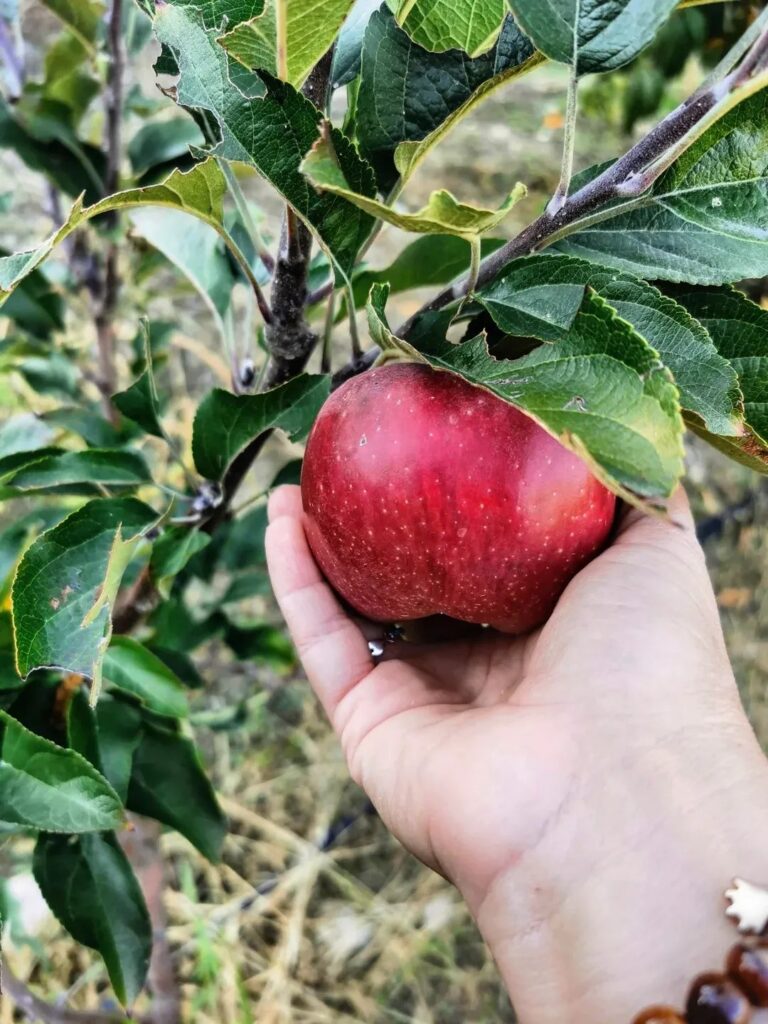
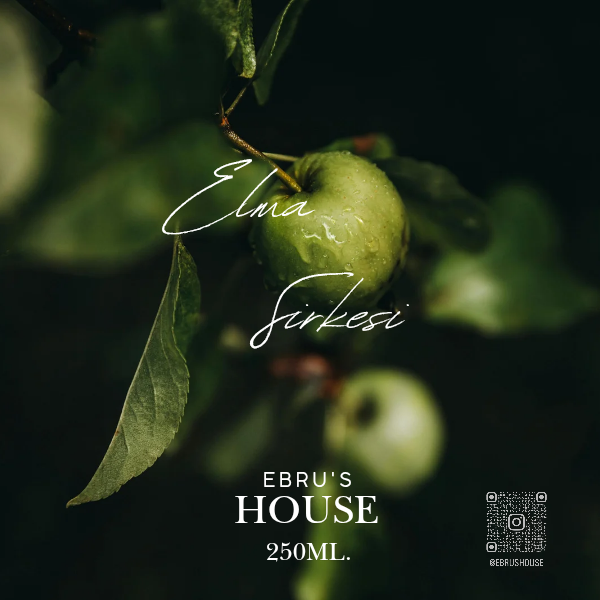
For this reason, we do not want the apples to be used in vinegar to be harvested in haste
In our practice, ripening apples are harvested during the full moon. We consider this period as the time when the natural cycle—where the tree transfers its nutrients, minerals, and water to its fruit—is completed.
“I smelled the scent of apples the moment I opened the lid.”
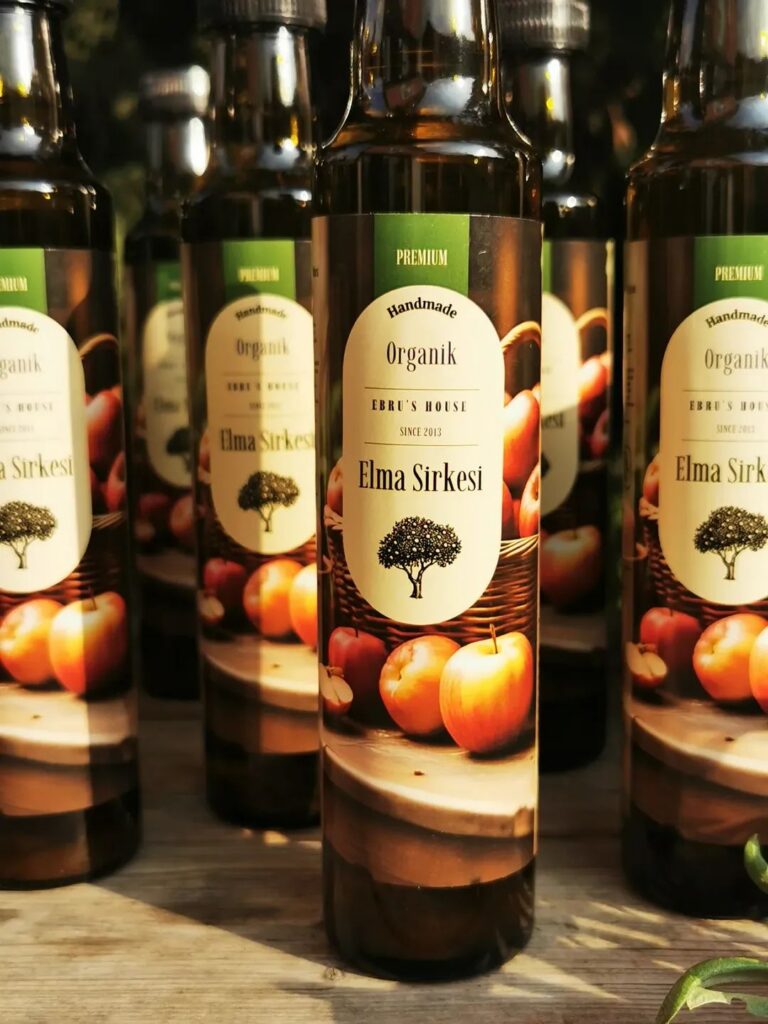
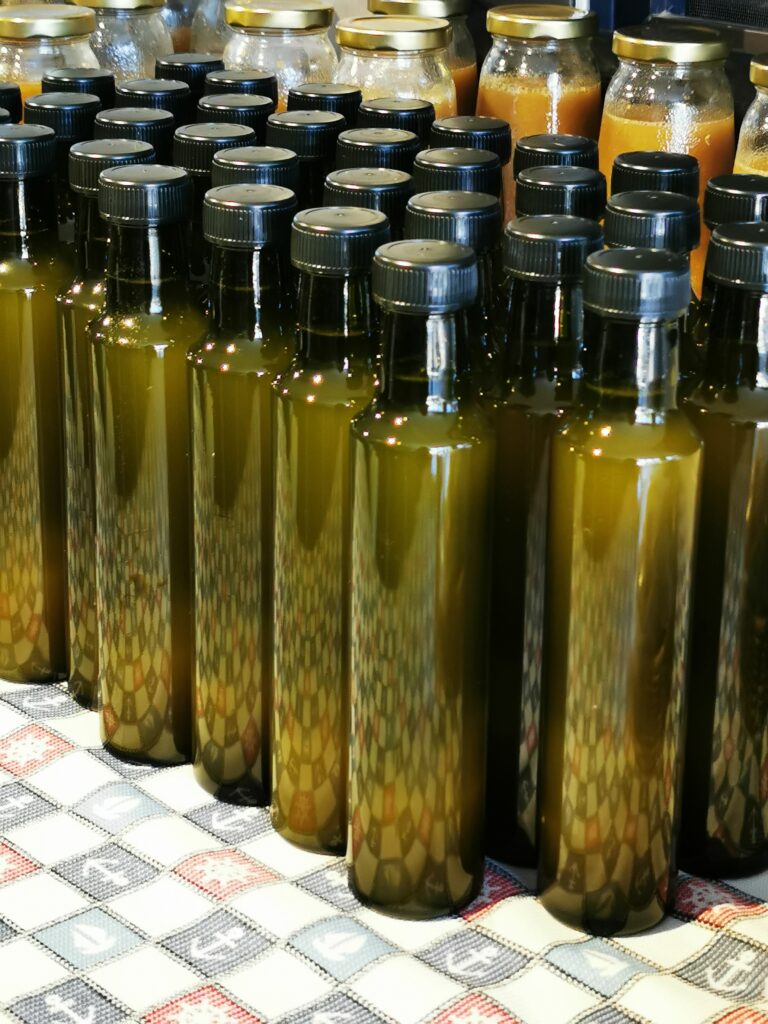
Ebru’s House Organic Apple Cider Vinegar
Without adding water.
Without adding sugar.
Without rushing.
Without filtering.
By allowing the apple its own story…